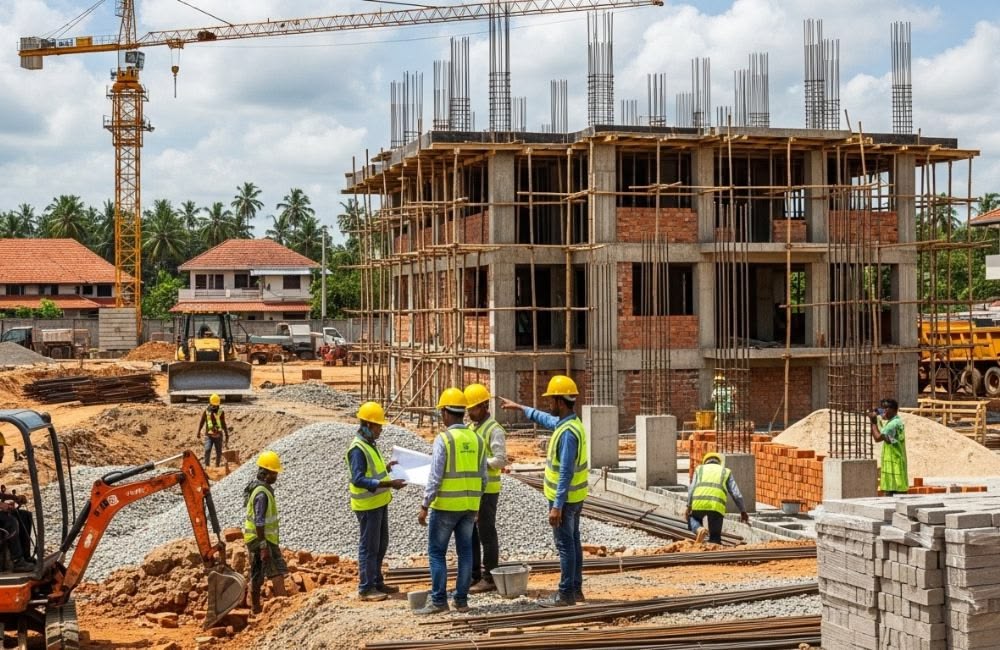
Getting a fuel station allotted or approved is only the first milestone. The next decision is who will build it, and that decision carries unusual weight.
Unlike a house or a shop, a fuel station is controlled by oil company specifications and statutory rules, and the people who build it must know exactly which work they may do and which belongs to licensed specialists. A petrol pump construction company in Bareilly should therefore be judged on discipline, honesty about scope and respect for approved drawings, not on slogans.
MTBOSS is an architect, interior design and construction company serving Moradabad and Bareilly, known for quality work, transparent pricing and on-time delivery. We do not claim fuel-station specialisation on this page. We explain how to choose a company, how scope is divided and what MTBOSS can and cannot take on.
Construction Services at MTBOSS
- Civil and building work: Foundations, frame, masonry, plaster and slabs
- Offices, shops and washrooms: On commercial sites, subject to discussion
- External works: Boundary walls, gates and related work
- Drainage and paving: Base work, as allotted
- Waterproofing: Roofs, washrooms and walls
- Plumbing and electrical: For ordinary building portions
- Finishing: Tile and marble work, carpentry, doors and windows, false ceilings, painting and finishing
- Renovation and repair: Existing buildings
Each project is quoted after a site visit, because plots, designs and conditions differ.
The Owner’s Journey
A fuel station project usually moves through recognisable stages.
- Allotment or agreement with the oil company, where applicable
- Land and use permissions
- Layout and drawings prepared or approved according to the oil company’s requirements
- Building plan sanction and other clearances, where required
- Selection of contractors and specialists
- Civil and building construction
Who Does What
Clarity about roles prevents the costliest misunderstandings.
- Oil marketing company: Usually provides or approves layout, specifications, equipment and branding, and may require its own approved vendors for certain works.
- Statutory authorities: Issue licences and clearances for storage and dispensing, and for building use, fire safety and environment, as applicable.
- Licensed specialists: Install tanks, pipelines, dispensers, hazardous-area electrical work and safety systems.
- Structural and design professionals: Prepare drawings. Structural design and certification belong to a qualified structural engineer.
- Building construction company: Builds the civil and building portions to approved drawings.
MTBOSS does not replace any of these. If the oil company requires empanelled contractors for particular works, that requirement must be met, and we will say plainly whether a given scope falls within what we can take on.
Scope Split at a Glance
| Work item | Usually handled by | Building company’s role |
|---|
| Site setting-out and levels | Building company | Marks and checks from approved drawings |
| Underground tank installation, pipelines | Licensed specialist, per OMC | Civil preparation only if allotted, to specialist instruction |
| Forecourt slab and paving base | Building company, per drawings | Builds to specification, no substitution |
| Canopy foundations and columns | Building company, per structural drawings | Builds as drawn |
| Canopy structure, lighting, signage | Specialist or OMC vendor | Prepares bases and provisions |
| Dispenser bases and conduits | Building company with specialist | Builds as drawn |
| Hazardous-area electrical and earthing | Qualified specialist | None beyond coordination |
| Drainage and separation chambers | Building company, per drawings | Builds as drawn |
| Office, shop and washrooms | Building company | Builds, waterproofs and finishes |
| Fire and safety systems | Specialist, per requirements | Prepares routes and rooms |
The table shows a typical split only. Your own project, your oil company and your approved drawings decide the real division, and the contract should state it exactly.
Due Diligence Before You Hire
Check each company on the same points.
- Relevant experience: Completed fuel station or comparable commercial projects, with locations you can verify
- Oil company requirements: Whether empanelment or approval is needed for the scope, and whether the company meets it
- Scope honesty: Does it say clearly what it will not do?
- Documents: Business and tax registration, and the professionals involved
- Safety practice: How it manages ignition sources, barriers and site rules
- Supervision: Who runs your site, and how often they attend
- References: Past clients you can speak to
- Written terms: Willingness to put scope, payments and changes on paper
A company that cannot describe where its work ends and a specialist’s begins is a risk on this kind of project.
Warning Signs
Be careful with a company that:
- Claims it can arrange approvals or licences through influence
- Offers to start before drawings are approved
- Says it can do every part of the station, including specialist work, without naming who is qualified
- Quotes by phone with no site visit
- Gives a single lump figure with no written scope
- Asks for a large advance before work
- Avoids showing completed projects
- Suggests bypassing the oil company’s specifications to save money
Shortcuts on a fuel station are not savings. They are liabilities.
Approvals First
Work should not begin until the approvals relevant to your project are in place.
- Allotment or agreement with the oil company, where applicable
- Land and use permissions for the intended activity
- Building plan sanction, where required
- Licences and clearances for petroleum storage and dispensing
- Fire, environment and other clearances, depending on the project
Drawings and Structural Responsibility
- Architectural and layout drawings define positions, levels and building portions
- Structural drawings, prepared by a qualified structural engineer, define foundations, slabs and canopy supports
- Specialist drawings define tanks, pipelines and systems
Site Visit and Written Scope
Our process starts on site.
- Visit the plot and note frontage, levels, access, drainage and neighbouring uses
- Review approved drawings and the oil company’s requirements
- Identify the civil and building scope and what belongs to others
- Prepare a written scope with inclusions and exclusions
- Explain materials and quality levels
- Share a staged quotation with clear assumptions
Work begins only after you approve the scope and quotation.
Cost depends on:
- Plot size and layout
- Scope allotted to the building company
- Size of the canopy, office and ancillary buildings
- Quality of finishes
- Soil and site conditions
- Site access and working conditions
You can try the Budget Calculator on the MTBOSS website for a starting idea of building costs. Final pricing follows the site visit and scope discussion.
Civil Work Standards
Whatever the exact scope, the civil work follows disciplined habits.
- Setting-out and levels checked against approved drawings
- Forecourt slopes and drains built so water and spills do not collect
- Slabs and bases built to the specified details, with no unapproved substitutions
- Reinforcement and concrete practice checked before and during pours
- Curing managed carefully, especially in hot weather
- Drainage chambers and covers built as drawn
- Waterproofing tested before tiling in washrooms
Where the structural engineer requires testing, we arrange it and keep the results.
Safety Culture on Site
Construction on or near a fuel site carries added risk.
- Permits and briefings as required by the oil company and site owner
- Strict control of ignition sources, including hot work, tools and smoking
- Safe handling and storage of materials
- Barriers and signage separating work areas from operating areas
- Protection of neighbours, customers and passers-by
- A clean, organised site with regular debris removal
Supervision and Reporting
- A named point of contact for you
- Work from approved drawings only
- Checks before concreting and at critical civil stages
- Levels and slopes verified before paving and drainage are finished
- Pipes and conduits for building portions tested before they are covered
- Regular updates by phone or WhatsApp, with dated photos
- Prompt reporting of problems, delays and proposed changes
Our checks are advisory records of what we observe, and they do not replace the responsibilities of your structural engineer, specialists, the oil company or the authorities.
Risk Register for the Owner
Naming risks early helps manage them.
- Approval delays: Start permissions early and confirm requirements with the authorities.
- Scope gaps between parties: Write the scope split into every contract and review it jointly.
- Unapproved changes: Require written approval from the designer and the oil company for anything that affects layout or safety provisions.
- Drainage and slope errors: Verify levels before paving is finished.
- Weather delays: Plan around the monsoon and protect materials.
- Cost drift: Use stage-wise payments, written change approvals and a contingency reserve.
- Specialist sequencing: Agree dates for civil readiness, specialist installation and testing.
Contract and Payment Terms
A written agreement protects both sides.
- Scope of work and the approved drawings it is based on
- What belongs to the building company and what belongs to specialists or the oil company
- Materials and quality levels
- Order of work and general schedule, with weather allowances
- Payment stages linked to completed work
- How changes and extra work are handled, with written approvals
- Responsibility for cleaning and debris removal
Be careful with any company that avoids writing things down or asks for a large advance before work begins.
Handover and Records
Before commissioning, owners should confirm:
- Final inspection of civil work, finishes and fittings
- Drainage and slope checks
- Testing and commissioning of fuel and safety systems by the responsible specialists
- Final drawings, including any approved changes
- Photos of concealed work, such as steel, pipes and conduits
- Care and maintenance guidance for paving, drains and washrooms
- Licences and clearances in place, with guidance from qualified professionals
Licences and clearances required before operation remain the owner’s responsibility.
Local Conditions in Bareilly
Bareilly has hot summers, humid monsoon months and cool winters, and civil work should respond.
- Careful curing of concrete in hot weather
- Scheduling that avoids rain damage and protects materials
- Drainage planning so water leaves the forecourt
- Materials suited to heat, rain and humidity
Proof of Completed Work
Our Portfolio page shows examples of MTBOSS work, and we encourage you to ask any company for the same.
Owner note: Add verified details below before publishing, or remove this block. Do not claim projects that were not completed.
- Completed fuel station or similar projects, if any: [Number, types and locations, or "None yet"]
- Other completed projects: [Number and types]
- Oil company empanelment, if any: [Details, or "None"]
- Years of operation: [Years]
- Client references on request: [Yes or No]
The MTBOSS Process
- Enquiry: Call or WhatsApp us with your location, project type and a short description.
- Requirements review:We discuss your oil company’s requirements and the approved drawings.
- Site visit: We visit, measure and discuss your needs and constraints.
- Scope and quotation:You receive a written scope that separates our portion from specialists’ work. Work begins only after you approve.
- Construction and supervision: Work is supervised with strict safety rules and updates.
- Inspection and handover: Civil work is inspected with your team and handed over with records.
Service Areas in Bareilly
MTBOSS serves clients in Bareilly, including areas such as Civil Lines, Rampur Garden, Izzatnagar, Subhash Nagar, DD Puram and Pilibhit Bypass Road. Our office is at Harthala Kanth Road, Moradabad. If your site is elsewhere in or around Bareilly, contact us and we will confirm availability.
Contact MTBOSS
Visit the MTBOSS website or the Contact page to try the Budget Calculator and view our Portfolio.
Choose a company that is honest about where its work ends. Contact MTBOSS today to discuss your project in Bareilly.
Frequently Asked Questions
- Q1. Is MTBOSS a petrol pump construction company in Bareilly?
We serve Bareilly with construction and renovation. Please discuss the scope we can take on for your project. - Q2. Have you built petrol pumps before?
Please ask us about relevant projects. We share only verified details on request. - Q3. Do you install tanks and dispensers?
No. Licensed specialists do, to oil company and authority requirements. We handle suitable civil and building portions. - Q4. Do I need an oil company empanelled contractor?
It depends on the oil company and scope. Please confirm its requirements before hiring anyone. - Q5. Can you arrange licences and approvals?
No. We build from approved drawings. Licences and clearances should be confirmed with the oil company and authorities. - Q6. Does MTBOSS provide structural design?
We coordinate with a qualified structural professional, who provides structural certification. - Q7. What building work can you take on?
Forecourt slab bases, canopy foundations, offices, shops, washrooms, boundary walls and drainage, as allotted. - Q8. Do you visit the site before quoting?
Yes. We visit, measure and share a written scope and quotation. - Q9. How much does petrol pump construction cost in Bareilly?
It depends on layout, scope and site conditions. Final pricing follows the site visit. - Q10. How do I contact MTBOSS?
Call or WhatsApp +91 94584 10866, or use the contact form on mtboss.in.