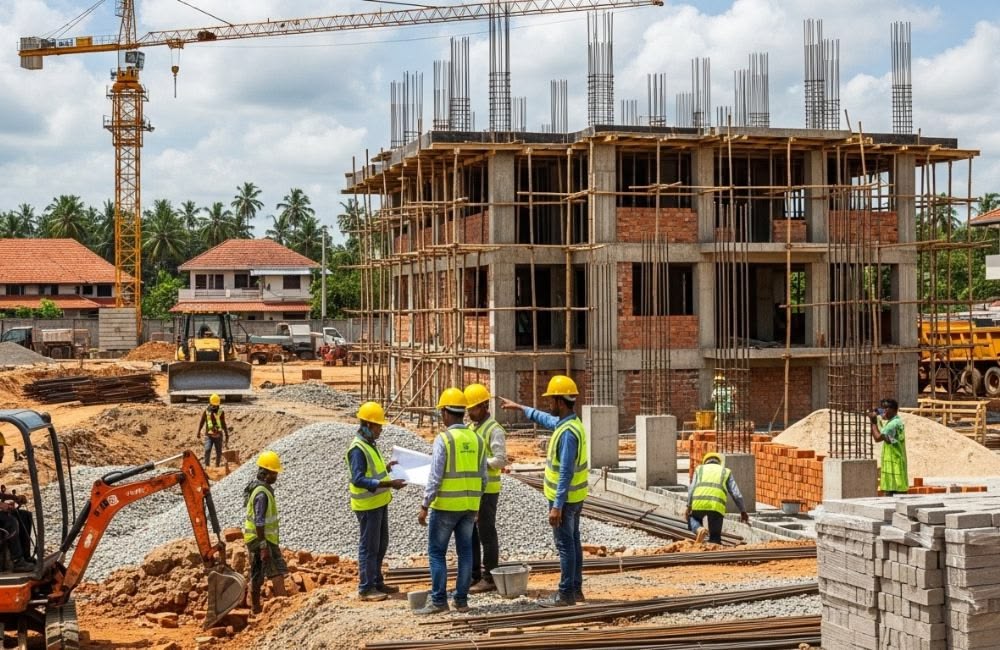
Almost every owner starts a house project with the same question: what is the rate per square foot? It is a sensible place to begin, and a dangerous place to stop.
Two builders can quote the same rate and deliver very different houses, because the figure says nothing about the materials, the finishes, the exclusions or the way the area was measured.
A per-square-foot rate is a shortcut for comparing proposals. Used carefully, it helps you set a rough budget and spot a quotation that looks too good to be true. Used carelessly, it leads to bills that grow after work begins, because the items the rate left out turn up one by one.
MTBoss is a construction and design company based at Harthala, Kanth Road, Moradabad, serving Bareilly and Moradabad. This page explains what a per-square-foot rate really means, which factors move it, how to compare two quotations and how to keep your final cost close to your first estimate.
Service Details and Benefits
A home construction estimate should show what is included, what is excluded, how the area is measured and how payments are linked to completed work. A single per-square-foot number can guide an early budget, but it cannot replace a written, itemised quotation.
Rate Snapshot
Owner note: Fill this block only with rates MTBoss will honour.
- Basic specification: From ₹[X] to ₹[Y] per sq ft of built-up area, covering [state what is included]
- Standard specification: From ₹[X] to ₹[Y] per sq ft, covering [state what is included]
- Premium specification: From ₹[X] to ₹[Y] per sq ft, covering [state what is included]
- Labour-only contract: From ₹[X] per sq ft
- Rates exclude: [List, such as boundary wall, interiors, furniture, authority fees]
- Taxes: [Included or extra]
- Rates valid until:[Date, or "subject to changes in material prices"]
If you prefer not to publish figures, replace this block with “Request an itemised estimate after a site visit” and keep the rest of the page.
What Does a Per Sq Ft Rate Actually Cover?
- Excavation, foundation and plinth
- Columns, beams, slabs and staircase
- Brickwork or block masonry
- Internal and external plaster
- Flooring and tiling, with the tile price band stated
- Doors, windows and grills, with materials named
- Electrical wiring, switches and basic fittings
Built-Up Area, Carpet Area and Covered Area
The same house can be described by three different areas, and mixing them is a common source of confusion.
- Carpet area: The usable floor inside the rooms, excluding wall thickness
- Built-up area: Carpet area plus the thickness of walls, and usually balconies and sunshades as the builder counts them
- Covered area: The whole footprint under a roof or slab on each floor, which can include porches and stairwells
Factors That Push the Rate Up or Down
The rate is the result of many choices, so it moves with each of them.
- Quality of finishes: Tiles, sanitary ware, paint, doors and windows are the largest swing factor
- Structural design: Spans, number of floors, basement and soil conditions affect concrete and steel quantities
- Foundation type: Soft or filled soil may need deeper or special foundations
- Number of floors: The first floor costs less per sq ft than a design with complex upper levels or a heavy terrace
- Plan shape: Simple rectangular plans cost less than plans with many corners, curves and projections
- Elevation work: Cladding, large glass areas, projections and decorative features add cost
Specification Tiers Explained
- Basic: Economical materials, simple tiles, standard sanitary ware and plain paint, suited to budget-led homes and rental floors
- Standard: Mid-range tiles, better fittings, quality doors and windows and more finishing detail, suited to most family homes
- Premium: Higher-grade materials, larger glazing, stone or designer finishes, better fittings and detailed interiors
Cost Layers Beyond the Construction Rate
The per-square-foot rate rarely covers the whole project. Budget separately for:
- Design fee: Architect or designer charges, and structural engineer fees
- Approvals: Authority fees and related charges for sanctioning your plan
- Soil testing and survey
- Boundary wall, gate and external paving
- Interiors and furniture: Kitchen, wardrobes, ceilings, curtains and appliances
- Electricity and water connections
- Septic tank or sewer connection, where needed
- Rainwater harvesting and solar, where you choose to install them
- Taxes
- Contingency: A reserve for price changes and surprises on site
Cost Differences by Floor and Structure
Per-square-foot figures change across a building.
- Ground floor: Carries the foundation and plinth, so it often costs more per sq ft than upper floors
- Upper floors: Usually cost less per sq ft, though stairs, lifts and services still add up
- Terrace and headroom: Waterproofing, parapet and staircase cover are costs that are easy to forget
- Basement: Excavation, retaining walls, waterproofing and ventilation make it more expensive than a regular floor
- Balconies and projections: Structurally demanding, so they may be charged at a different rate
- Extra floors added later: Need a foundation designed to carry them, so planning early is cheaper than strengthening later
Worked Example of a Home Budget
- Construction at the chosen specification: 3,000 sq ft × ₹[X] = ₹[A]
- Staircase headroom and terrace parapet, if charged separately: ₹[B]
- Boundary wall and gate: ₹[C]
- Water tank, sump and external drainage: ₹[D]
- Electricity and water connection charges: ₹[E]
- Design fee and structural engineer: ₹[F]
- Authority fees: ₹[G]
- Interiors, kitchen and furniture: ₹[H]
- Contingency reserve: ₹[I]
Labour-Only, Material Plus Labour and Turnkey Rates
The same house costs differently depending on who buys what.
- Labour-only: The builder charges for workers and supervision, and you buy materials. The rate is lower, but you carry the risk of purchasing, wastage and quality checks
- Material plus labour: The builder supplies both for an agreed scope, so one party answers for the product and the work
- Turnkey: The builder also handles design, approvals, finishing and handover, so you receive a ready house
- Item rate: Payment follows measured quantities, which suits phased or complex work
Hidden Costs That Surprise Owners
- Exclusions that were never discussed, such as waterproofing, tiles above a certain price, grills and external works
- Specification changes mid-project, where “standard” turns out to mean something different from what you expected
- Foundation surprises: Soft soil or a high water level found after digging
- Material price swings on long projects
Ways to Control the Final Cost
- Fix the brief before design: Changes after construction starts cost the most
- Choose a simple plan shape: Fewer corners and projections save money
- Match the specification to your budget: Decide finishes before work reaches them
- Compare itemised quotations: Not just per-square-foot rates
- Ask for rates for extras in advance: So changes are priced openly
- Phase the work where sensible: Build the structure and essential finishes first, and add interiors later
- Plan for the monsoon: So schedule slips do not drive up costs
- Keep a contingency reserve: Treat it as part of the budget
- Keep a written record: For every approved change
Method for Comparing Two Quotations
Reduce both quotations to the same basis before you compare them.
- Convert both to the same area measure, and confirm how balconies and terraces are counted
- List the inclusions and exclusions of each
- Compare materials by grade and brand, not by tier name
- Compare payment stages and how they link to completed work
- Compare the schedule and the defects period
Bareilly Factors That Affect Cost
- Soil: Soil can vary from plot to plot, and some soils need deeper or special foundations. A soil test on larger buildings helps avoid surprises.
- Monsoon: Heavy rain delays excavation and concreting and can add costs for protection and rework.
- Plot access: Narrow lanes and limited storage in dense areas raise carrying and labour costs.
- Local material prices: Cement, steel, sand, bricks and labour rates change over time, so a quotation should state how long it stays valid.
- Authority requirements: Depending on your location, the Bareilly Development Authority or another local body may sanction your plan, and the rules may influence what you can build and how.
Payments and Agreements
Put the arrangement in writing. A sound agreement states the scope, specification, price and exclusions, the schedule, payment stages linked to completed work, how changes are priced and approved and the defects period after handover.
Ask for a tax invoice for every payment. Avoid paying most of the money upfront, or paying without receipts. Have a qualified legal professional review any agreement before you sign.
Working With Us From Bareilly
Our office is in Moradabad, and we serve Bareilly through site visits, scheduled supervision and regular updates. We usually begin with a call or WhatsApp message and photographs, then visit your plot for measurement and discussion, with visit arrangements, including any charge, agreed first.
We do not claim a Bareilly office, and we would rather you hear that from us up front.
Warning Signs in a Cost Quotation
- A single per-square-foot figure with no list of inclusions
- A rate far below every other quotation, with no explanation
- “Standard material” with no grades or brands named
- Exclusions that are not stated
- A large advance demanded before any paperwork
- No written agreement
- No named engineer or supervisor
- No validity date on the rate
Any one of these is a reason to ask more questions.
What to Ask Before You Accept a Rate
- Which area do you measure, and how are balconies and terraces counted?
- What exactly is included, and what is excluded?
- Which materials, grades and brands are specified?
- How long does the rate stay valid?
- How are payments linked to progress?
Why Choose MTBoss
- Itemised, written estimates: You see quantities, materials, labour, timeline and payment stages before you commit, not just a single rate.
- Design and construction under one team: MTBoss builds, renovates and repairs homes, shops and commercial and industrial properties, and our design team can prepare drawings, so cost and buildability are checked together.
- Early budget guidance: The Budget Calculator on our website gives a quick idea of cost before you spend anything on design or estimates.
- Clear specifications:We name materials by grade, so “standard” means the same thing to both of us.
- Flexible contracts: Choose turnkey, material plus labour, labour only or item rate, whichever suits your budget and time.
- A wide range under one brand: Our website also lists building elevation, architecture and interior, waterproofing, electrician, plumber, painter, modular kitchen, false ceiling and readymade boundary services, so one team can coordinate the work.
- Honest about promises: We do not guarantee approvals, and we do not claim registrations or rankings we cannot show.
- Easy to reach: Call, WhatsApp, email, use the quote form on our website or visit our office on Kanth Road, Moradabad.
Call to Action
Ready to turn a per-square-foot guess into an itemised estimate for your plot? Contact MTBoss today.
Send your plot location and size, drawings if you have them, photographs and a short brief with your budget range, and we will arrange a site visit and a written estimate.
Frequently Asked Questions
- Q1. What is the home construction cost per sq ft in Bareilly?
It depends on specification, design and site. We give an itemised estimate after a site visit [add range if published]. - Q2. Why do builders quote different rates?
Scope, materials, exclusions and how area is measured differ between quotations. - Q3. Does the rate include everything?
Not always. Ask for inclusions and exclusions in writing. - Q4. Which area is the rate based on?
Usually built-up area. Ask how balconies and terraces are counted. - Q5. What costs sit outside the rate?
Design fees, approvals, boundary wall, connections, interiors and taxes. - Q6. Is labour-only cheaper?
The rate is lower, but you carry purchasing, wastage and quality risk. - Q7. How long does a quoted rate stay valid?
It is stated in the quotation, since material prices change [confirm period]. - Q8. Can I check my budget first?
Yes. Use the Budget Calculator on www.mtboss.in for an early idea.