Good civil work is rarely the result of luck. It comes from decisions made in the right order: drawings before digging, waterproofing before tiles, payments tied to completed stages and weather planned around the monsoon. Owners who understand this sequence ask better questions, spot problems earlier and spend less on repairs. This guide to civil work in Bareilly is written for the person who owns the plot or building, so you know what to plan, what to check and what to keep in writing.
MTBOSS is an architect, interior design and construction company serving Moradabad and Bareilly, known for quality work, transparent pricing and on-time delivery. We handle civil work for homes, shops and offices, with finishing trades available under the same company.
Civil Work Services at MTBOSS
- New construction of houses, duplexes, shops, offices and small commercial buildings
- Repair and renovation of old buildings
- Extensions and added floors, after structural assessment
- Waterproofing for terraces, washrooms, balconies and walls
- Boundary walls, gates and external works
- Finishing coordination with plumbing, electrical, tiles, carpentry, ceilings and painting
Each project is quoted after a site visit, because plots, designs and conditions differ.
Planning Before Any Work Starts
The most valuable civil work decisions happen before a single worker arrives.
- Define the purpose: self-use, rent, business or resale
- Fix the budget range and keep a reserve for unknowns
- Prepare or review drawings: architectural and structural
- Confirm approvals with the local development authority where required
- Decide the contract type and how work will be measured and paid
- Plan access and storage for materials on site
- Decide who will take decisions for the family or business
Drawings and approvals come first. Starting with a verbal plan is the most common source of later disputes.
Seasonal Calendar for Bareilly
Bareilly has hot summers, humid monsoon months and cool winters, and each season suits some civil work better than others.
- Winter and early spring. Comfortable working conditions, good for foundations, concreting and masonry, with careful attention to cold-morning curing where needed.
- Summer. Longer working days, but concrete and plaster dry quickly, so curing must be managed carefully.
- Monsoon. Rain disturbs excavation, concreting and plastering. It is also the best time to see where water collects and where terraces and walls leak, which helps plan waterproofing and drainage.
- Post-monsoon. A good moment for repair, waterproofing and external work once surfaces have dried.
The right schedule depends on your project, so we discuss timing during the site visit instead of applying a fixed rule.
Stage-by-Stage Checklist
Use this checklist to follow a typical building project.
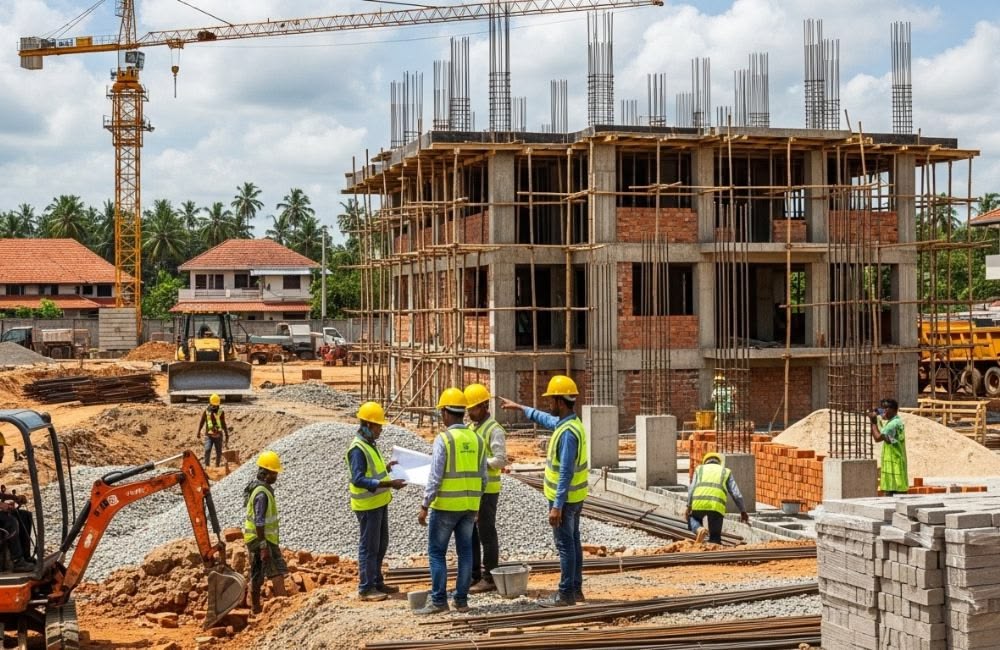
- Stage 1: Site Setting-Out
- Plot boundary matches your documents
- Building lines match the drawing
- Reference levels fixed from road and drainage
- Stage 2: Excavation and Foundation
- Depth and width match the structural drawing
- Reinforcement placed as drawn, with proper cover
- Concrete placed and compacted properly
- Curing arranged
- Stage 3: Columns, Beams and Slabs
- Shuttering strong and level
- Steel checked before concreting
- Concrete placed and cured as specified
- Shuttering removed only after adequate strength
- Stage 4: Masonry
- Walls plumb and level
- Openings match door and window schedule
- Joints well filled
- Stage 5: Concealed Services
- Conduits and pipes placed to layout
- Pipes tested before covering
- Stage 6: Plaster and Waterproofing
- Surfaces prepared and cured
- Waterproofing applied and tested before tiles
- Stage 7: Flooring Base and External Work
- Levels and slopes correct
- Drainage outlets working
- Boundary wall and gate built to plan
- Stage 8: Handover to Finishing
- Civil work inspected and signed off
- Finishing trades follow in the right order
This list is a simplified guide. The structural engineer's drawings and instructions decide technical details.
Budget Buckets for Civil Work
Thinking in buckets avoids surprises.
- Structure: foundation, RCC frame, walls
- Surfaces: plaster, flooring base, terrace treatment
- Waterproofing and drainage
- Concealed services: plumbing and electrical rough work
- External work: boundary wall, gate, driveway, drainage
- Labour and supervision
- Contingency: for soil, hidden defects and changes
- Approvals and professional services
Cost depends on: plot size, number of floors, structural complexity, materials, site access and ground conditions. You can try the Budget Calculator on the MTBOSS website for a starting idea. Final pricing follows the site visit and scope discussion.
Risks and How to Reduce Them
Most civil problems are predictable. Naming them early helps.
- Unclear scope. Reduce it with a written scope listing inclusions and exclusions.
- Work without drawings. Reduce it by insisting on architectural and structural drawings before digging.
- Weak concrete practice. Reduce it with checks on mixing, compaction and curing.
- Leakage. Reduce it by planning waterproofing and drainage early, and testing before tiling.
- Weather delays. Reduce them by scheduling around the monsoon and protecting materials.
- Cost drift. Reduce it with stage-wise payments, change discussions in writing and a contingency reserve.
- Structural surprises in old buildings.Reduce them with inspection and a qualified structural engineer's opinion before changes.
Drawings, Structure and Approvals
Architectural drawings show layout, openings and levels. Structural drawings, prepared by a qualified structural engineer, show foundations, columns, beams and slabs. Structural design and stability certification belong to that engineer. MTBOSS coordinates with a qualified structural professional and builds according to the drawings. If the site differs from a drawing, we raise it before changing anything.
Rules on permissions vary by area and authority and change over time, so confirm them with the local development authority before work starts, and build according to the sanctioned plan.
Contract and Payment Planning
Decide these points in writing before work begins.
- Scope of work and the drawings it is based on
- Contract type, such as item-rate, lump-sum or material-inclusive
- Materials and quality levels
- Order of work and general schedule
- Payment stages linked to completed work
- How changes and extra work are handled
- Responsibility for cleaning and debris removal
Be careful with any contractor who avoids writing things down or asks for a large advance before work.
Materials Planning
Materials affect strength, durability and cost.
- Cement, steel, sand and aggregate from reliable sources
- Bricks or blocks suited to the building and budget
- Pipes, conduits and fittings for concealed services
- Waterproofing products suited to each location
- Protected storage, especially in the monsoon
- Records of deliveries and quantities
We explain material choices and the reasoning behind them, so you can decide where to spend and where to save.
Waterproofing and Drainage Planning
Water causes more long-term damage than almost anything else, so plan for it early.
- Terrace and roof with correct slope and outlets
- Washrooms and kitchens waterproofed and tested before tiling
- Balconies sloped and drained
- External walls protected where required
- Rainwater and wastewater drainage around the building
MTBOSS offers waterproofing as part of construction and renovation, so protection is built in from the start.
Civil Work for Existing Buildings
Repair and renovation need an inspection-first approach.
- Record cracks, damp patches and visible defects
- Find causes before choosing repairs
- Repair structure and water problems before finishing
- Phase work where part of the building stays in use
- Involve a qualified structural professional before removing walls, adding floors or changing openings
We do not issue structural safety certificates. If a crack is wide, growing or in a beam, column or slab, or if you notice sagging, a qualified structural engineer should assess the building.
What Owners Should Do During Construction
Your involvement helps quality.
- Visit the site regularly, at agreed times
- Keep drawings and approvals available on site
- Take dated photos at each stage
- Ask for explanations of anything unclear
- Make decisions on materials and finishes on time
- Put important instructions and changes in writing
- Check each stage before releasing the related payment
Active, courteous involvement keeps the project honest without disturbing the work.
Supervision and Communication
- A single point of contact for you
- Checks at key stages
- Regular updates by phone or WhatsApp, with photos where useful
- Prompt reporting of problems and delays
- Discussion before changes that affect cost or schedule
Safety and Site Order
- Safe scaffolding, edge protection and excavation support
- Safe handling of materials and equipment
- Electrical safety for temporary connections
- Protection of neighbours and passers-by
- A clean, organised site with debris removal
Handover Documents and Records
At the end of civil work, keep a clean record.
- Final drawings, including any changes made during construction
- Approvals and related paperwork you hold
- Photos of concealed work, such as foundations, steel and pipes
- Details of waterproofing treatments applied
- Contact details of the people who carried out major trades
- Care and maintenance guidance for terraces, washrooms and finishes
These records help with future repairs, extensions and resale.
Coordination with Finishing Trades
Civil work connects to every trade that follows. MTBOSS offers building repair and renovation, waterproofing, plumber, electrician, tile and marble, carpenter, door and window install, false ceiling, PVC panel-louvers, painter, wallpaper installation, modular kitchen and pest control, so one team can sequence them in the right order.
Proof of Completed Work
Our Portfolio page shows examples of MTBOSS work, and we encourage you to ask any contractor for the same.
The MTBOSS Process
- Enquiry. Call or WhatsApp us with your location, project type and a short description. Photos help.
- Site visit. We visit, measure and discuss your needs.
- Scope and quotation. You receive a written scope. Work begins only after you approve.
- Planning. We finalise sequence, materials and labour.
- Construction and supervision. Work is supervised, with updates at key stages.
- Finishing and handover. Work is inspected and handed over, with finishing trades following if you choose.
Service Areas in Bareilly
MTBOSS serves clients in Bareilly, including areas such as Civil Lines, Rampur Garden, Izzatnagar, Subhash Nagar, DD Puram and Pilibhit Bypass Road. Our office is at Harthala Kanth Road, Moradabad. If your site is elsewhere in or around Bareilly, contact us and we will confirm availability.
Contact MTBOSS
Visit the MTBOSS website to try the Budget Calculator and view our Portfolio.
Plan the sequence, keep records and build on a strong base. Contact MTBOSS today for civil work in Bareilly.
Frequently Asked Questions
- Q1. Does MTBOSS provide civil work in Bareilly?
Yes. We serve Bareilly and Moradabad with construction, repair, extension and finishing work. - Q2. Which season is best for civil work?
It depends on the work. Winter suits many tasks, while the monsoon shows where leaks and drainage problems are. - Q3. Do you work from approved drawings?
Yes. Any site difference is raised before work is changed. - Q4. Does MTBOSS provide structural design?
We coordinate with a qualified structural professional, who provides structural certification. - Q5. Can you handle small repairs?
Yes. We handle cracks, seepage, plaster, floors and small extensions as well as new buildings. - Q6. Can you add a floor to my house?
Only after a qualified structural professional assesses the building. We then plan and build. - Q7. How are payments handled?
Payment stages are agreed in writing and linked to progress. - Q8. Do you visit the site before quoting?
Yes. We visit, measure and share a written scope and quotation. - Q9. How much does civil work cost in Bareilly?
It depends on size, structure, materials and site conditions. Final pricing follows the site visit. - Q10. How do I contact MTBOSS?
Call or WhatsApp +91 94584 10866, or use the contact form on mtboss.in.