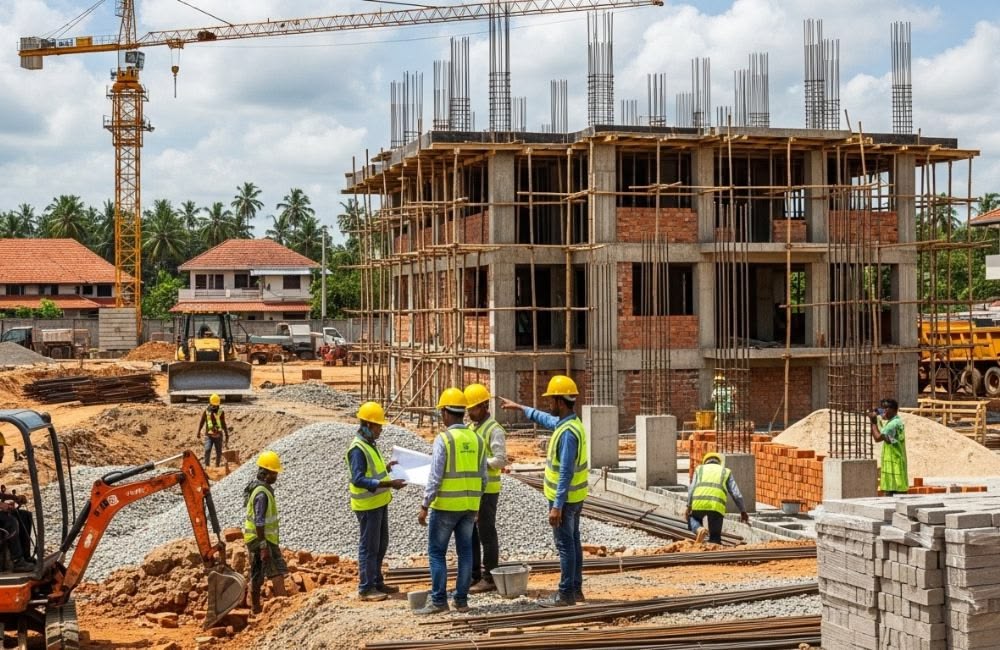
Hiring a civil contractor is a trust decision backed by paperwork. You hand over a plot or a building, a budget and a set of expectations, and the contractor turns them into walls, slabs, floors and drains. When the terms are clear and the site is supervised, the experience is smooth. When terms are vague, the same project turns into arguments about quantities, extras and who was supposed to do what.
MTBOSS is an architect, interior design and construction company serving Moradabad and Bareilly, known for quality work, transparent pricing and on-time delivery. This page explains how contractor work is structured, what to put in writing and how MTBOSS handles civil contracting.
Role of a Civil Contractor
A civil contractor carries out the physical work of a project according to drawings and an agreed scope. Typical responsibilities include:
- Arranging skilled labour and supervision
- Executing earthwork, foundations, RCC, masonry and plastering
- Following the sequence of work shown in the plan
- Maintaining quality at each stage
- Managing safety and housekeeping on site
- Reporting progress and raising issues early
- Handing over completed work in a clean, usable state
Civil Contracting Services at MTBOSS
- New construction: Houses, duplexes, shops, offices and small commercial buildings
- Extensions and added floors, after structural assessment
- Boundary walls, gates and external works
- Repair and renovation of old buildings
- Waterproofing and damp treatment
- Finishing coordination, with plumbing, electrical, tiles, carpentry, ceilings and painting available under the same company
Types of Contracts
Civil work is commonly arranged in a few ways. Each has advantages and risks, so choose with care.
- Labour contract.The owner supplies materials and the contractor supplies labour and supervision. This can reduce the contractor's charge but puts material buying, storage and wastage on the owner.
- Item-rate contract. Work is divided into items, such as excavation, concrete, masonry and plaster, each priced per unit. The final amount depends on measured quantities.
- Lump-sum contract. A single price for a defined scope. It gives cost certainty if the scope is detailed, but changes can lead to disputes.
- Material-inclusive contract. The contractor supplies both labour and materials, to an agreed specification. This gives one point of responsibility, provided the specification is clear.
We discuss the options openly, and explain how each would work on your project before you decide.
Defining the Scope of Work
An unclear scope is the biggest source of disputes. A written scope should list:
- What is included, item by item
- What is excluded
- The drawings and specifications it is based on
- Materials and quality levels
- External works, such as boundary wall, gate, drainage and septic provision
- Who handles permissions, utility connections and cleaning
- Provisions for unforeseen items, such as soil conditions
If a contractor cannot or will not describe the scope in writing, treat it as a warning.
Drawings and Approvals
Work should be based on drawings, not memory.
- Architectural drawings define layout, openings and finishes
- Structural drawings, prepared by a qualified structural engineer, define foundations, columns, beams and slabs
- Service layouts guide plumbing and electrical work
- A sanctioned building plan, where required, protects the owner
Rules on permissions vary by area and authority and change over time, so confirm them with the local development authority before work starts. MTBOSS coordinates with a qualified structural professional and builds according to the drawings. If the site differs from a drawing, we raise it before changing anything.
Site Visit and Quotation
A quotation without a site visit is a guess. Our approach is to:
- Visit the plot or building and note access, levels, neighbours and conditions
- Review drawings or discuss your plan
- Prepare a written scope and quotation
- Explain materials, quality levels and assumptions
- Discuss uncertainties, such as soil or hidden defects, and how they would be handled
Cost depends on:
- Plot size and built-up area
- Number of floors
- Design and structural complexity
- Quality of materials and finishes
- Type of contract chosen
- Site access and ground conditions
Work Orders and Agreements
A written agreement protects both sides. It should state:
- The parties and the site
- The scope and the drawings it is based on
- The type of contract and how the amount is determined
- Materials and quality levels
- Order of work and general schedule
- Payment stages linked to progress
- How changes and extra work are handled
- Responsibility for cleaning and debris removal
- Contact points for communication
Measurement and Billing
For item-rate and similar arrangements, measurement decides the bill. Good practice includes:
- Agreeing the method of measurement before work starts
- Joint measurement of completed work, where possible
- Records of quantities, such as concrete volume, masonry area and plaster area
- Clear billing by stage, with supporting measurements
- Separate listing of extra work
Clear measurement records prevent disagreements at the end of the project.
Payment Stages
Payments tied to progress keep incentives aligned.
- Stage-wise payments linked to completed work, such as foundation, slab and plaster
- Checks before each payment, so you can confirm the stage is complete
- No large advance without justification
- Retention or final-stage balance, where agreed, to ensure proper completion
Specific terms should be agreed in writing before work starts.
Subcontracting and Labour
Many contractors use specialist teams for particular trades. This is normal, but it should be transparent.
- Who does what should be clear to you
- Responsibility for quality and schedule stays with the main contractor
- Skilled labour is matched to the task, for example for bar bending, shuttering, masonry and plaster
- Labour safety and welfare are the contractor's responsibility
- Statutory and legal obligations concerning labour should be followed
Ask any contractor how they organise labour and who will be on your site.
Supervision and Site Management
A site runs best when someone is clearly responsible.
- Daily direction of workers and a clear work plan
- Checks at key stages, such as before concreting, plastering and tiling
- Attention to levels, alignment and curing
- Control of materials, storage and wastage
- Prompt handling of problems and changes
- A single point of contact for you
Ask who will supervise your site, how often they will visit and what they will check.
Quality Control
Quality is built through repeated checks.
- Layout and levels before excavation
- Foundation and structural reinforcement before concreting
- Concrete quality, compaction and curing
- Masonry alignment and plumb
- Pipe and conduit testing before plastering
- Waterproofing tests before tiling
- Final inspection of completed work
Our checks are advisory records of what we observe, and they do not replace the responsibilities of your structural engineer or the authority.
Materials: Who Buys and Who Checks
Material decisions deserve clarity.
- Contractor-supplied materials should follow an agreed specification, with the right to inspect
- Owner-supplied materials need proper storage, timely delivery and agreed responsibility for wastage
- Quality checks on cement, steel, sand, aggregate, bricks, pipes and wires
- Storage practices that protect materials from rain and theft
- Records of deliveries and use
We explain material choices and the reasoning behind them, so you can decide where to spend and where to save.
Waterproofing and Drainage
Water causes more long-term damage than almost anything else, so it is part of civil contracting.
- Terrace and roof treatment with correct slope and drainage
- Washroom and kitchen waterproofing, tested before tiling
- Balcony drainage that leads water away from walls
- External wall protection
- Rainwater and wastewater drainage around the building
MTBOSS offers waterproofing as part of construction and renovation, so protection is built in from the start.
Small Works and Large Projects
- Small works. Repairs, partitions, boundary wall sections, floor base work, terrace repair and minor extensions. These benefit from quick site assessment and clear, simple scope.
- Medium projects. Houses, shops and small offices, where planning, supervision and trade coordination matter.
- Larger projects. Multi-storey and commercial buildings, where structure, services, safety and scheduling are more complex.
We adjust our approach to the size of the job, but the principles of scope, supervision and written clarity stay the same.
Repair, Renovation and Extension Contracts
Existing buildings carry unknowns, so contracts should account for them.
- Inspection first, to understand cracks, dampness, wiring and structural concerns
- Defined scope with a provision for hidden defects found during work
- Repair before finishing, so new surfaces are not damaged later
- Phased work, where part of the building stays in use
- Structural caution: Walls, slabs and added floors are assessed by a qualified structural professional before changes
We do not issue structural safety certificates. Where structure is in question, a qualified structural engineer must assess the building first.
Coordination with Finishing Trades
Civil work is followed by many other trades, and handovers between them need care.
- Plumbing and electrical rough work before plastering
- Waterproofing finished and tested before flooring
- Tile and marble work on a properly cured base
- Carpentry and ceilings after plastering is dry
- Painting last, after dust-creating work is complete
MTBOSS offers building repair and renovation, waterproofing, plumber, electrician, tile and marble, carpenter, door and window install, false ceiling, PVC panel-louvers, painter, wallpaper installation, modular kitchen and pest control, so these trades follow one plan.
Safety and Compliance on Site
A responsible contractor protects people on and around the site.
- Safe scaffolding, edge protection and excavation support
- Safe handling of materials and equipment
- Electrical safety for temporary connections
- Protection of neighbours and passers-by
- A clean, organised site with debris removal
- Clear rules for workers
Applicable legal and safety requirements for labour and construction should be followed, and they can change over time.
Local Conditions in Bareilly
- Careful curing of concrete in hot weather
- Scheduling that avoids rain damage and protects materials
- Drainage planning so water leaves the plot
- Roof treatment to reduce heat and prevent leakage
- Materials suited to heat, rain and humidity
Selecting a Civil Contractor
- A site visit before quotation
- A written scope with clear inclusions and exclusions
- A clear type of contract and method of measurement
- Work from approved drawings
- A named person responsible for your site
- Payment stages linked to progress
- Examples of completed projects
- A local office and easy contact
- Ability to coordinate other trades
- Open communication on problems
Be careful if a contractor quotes by phone, avoids showing completed work, pressures you to start before drawings are ready, or claims special influence with authorities.
Proof of Completed Work
Our Portfolio page shows examples of MTBOSS work, and we encourage you to ask any contractor for the same.
(Owner note: Add verified details below before publishing, or remove this block.)
- Completed projects: [Number and types, with locations]
- Years of operation: [Years]
- Client references on request: [Yes or No]
Service Areas in Bareilly
MTBOSS serves clients in Bareilly, including areas such as Civil Lines, Rampur Garden, Izzatnagar, Subhash Nagar, DD Puram and Pilibhit Bypass Road. Our office is at Harthala Kanth Road, Moradabad. If your site is elsewhere in or around Bareilly, contact us and we will confirm availability.
Contact MTBOSS
Visit the MTBOSS website or the Contact page to try the Budget Calculator and view our Portfolio.
Put the scope in writing and build with a contractor who supervises. Contact MTBOSS today for civil contracting in Bareilly.
Frequently Asked Questions
- Q1. Does MTBOSS work as a civil contractor in Bareilly?
Yes. We serve Bareilly and Moradabad with construction, repair, extension and finishing work. - Q2. Which types of contract do you offer?
We discuss labour, item-rate, lump-sum and material-inclusive options and explain each for your project. - Q3. Do you visit the site before quoting?
Yes. We visit, measure and share a written scope and quotation. - Q4. Do you build from approved drawings?
Yes. Any site difference is raised before work is changed. - Q5. Does MTBOSS provide structural design?
We coordinate with a qualified structural professional, who provides structural certification. - Q6. How are payments handled?
Payment stages are agreed in writing and linked to progress. We explain them before work starts. - Q7. Can you take small repair and extension jobs?
Yes. We handle small works as well as full building projects. - Q8. Can you handle finishing work too?
Yes. We also offer plumbing, electrical, tiles, carpentry, ceilings and painting. - Q9. How much does a civil contractor charge in Bareilly?
It depends on size, structure, materials and contract type. Final pricing follows the site visit. - Q10. How do I contact MTBOSS?
Call or WhatsApp +91 94584 10866, or use the contact form on mtboss.in.